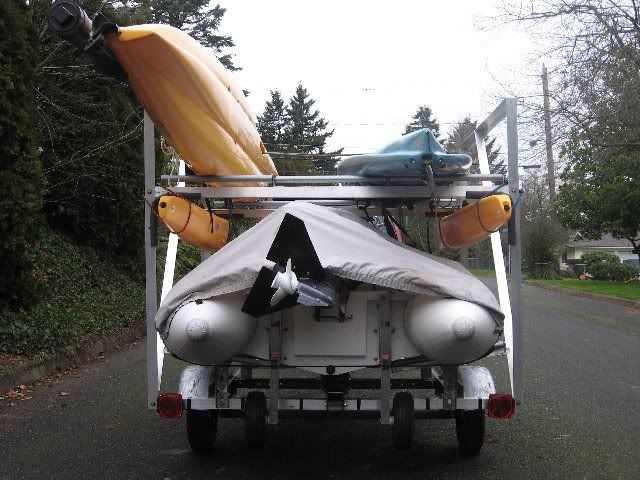
Transporting four Hobie kayaks and four bicycles is a significant logistical task. Hobies are generally heavier and wider than standard kayaks due to the MirageDrive systems and internal framing. For a "20-minute" loading job that will likely take 20 hours the first time you dial it in, here is the best way to rig your trailer for stability and safety.
1. The Trailer Foundation
Since you are towing with a minivan or RV, you need a galvanized marine trailer or a specialized multi-sport trailer (like those from Malone or Trailex). A standard utility trailer is often too short; kayaks that are 12 to 14 feet long will overhang dangerously without a long tongue.
2. The Tiered Rack System
To fit eight items on one footprint, you must go vertical.
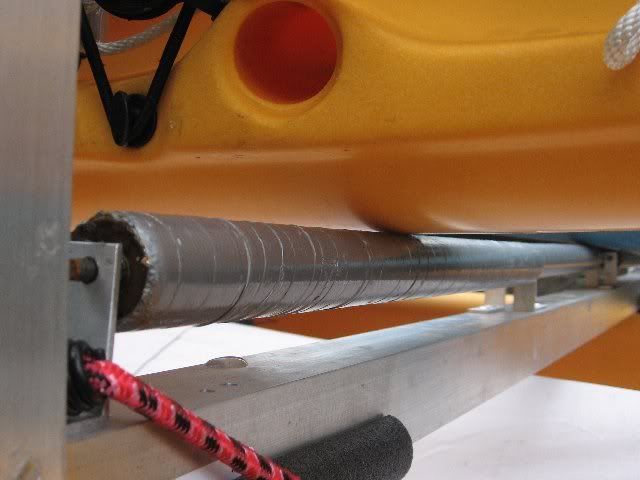
Bottom Tier (The Heaviest): Place the four Hobie kayaks on the lowest level to keep the center of gravity down. Use hull-conforming saddles or PVC bunks rather than flat bars to prevent the plastic hulls from "oil-canning" or warping under their own weight.
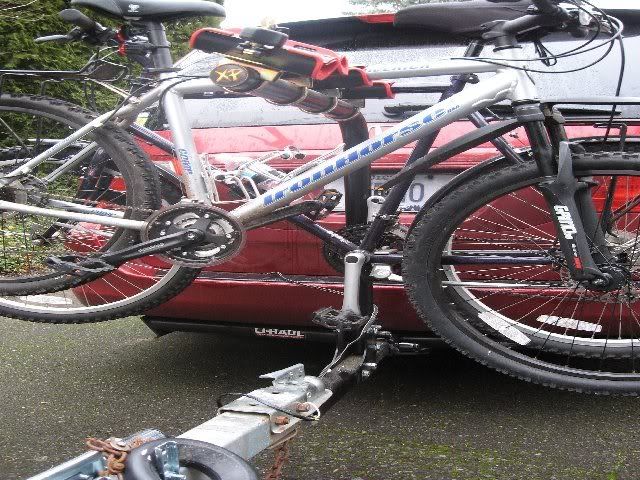
Top Tier (The Bicycles): Install a second "tree" or crossbar system above the kayaks. You can then mount four standard roof-top bicycle trays (like those from Thule or Yakima) to these bars.
3. Weight Distribution and Tongue Weight
This is critical for a minivan. You want about 10% to 15% of the total trailer weight on the hitch ball.
If the kayaks are too far back, the trailer will "fishtail" at highway speeds.
If the bicycles and kayaks are too far forward, it will squash the rear suspension of the minivan, making steering light and dangerous.
The Hobie Factor: Remove the MirageDrives, seats, and any heavy tackle boxes before loading. Store these inside the van or RV to reduce the "dead weight" on the trailer.
4. Security and Strapping
Use cam-action straps for the kayaks, not ratchets. Ratchet straps are powerful enough to crack the scupper holes or hulls of a Hobie. For the bikes, ensure the trays are bolted directly to the trailer frame or a heavy-duty crossbar.
The Digital Log
If you take photos of your rack spacing or the "20-hour" final loaded rig to share with the Hobie or RV forums, your phone will likely save them as WebP files. Many of the specialized towing and kayaking boards still struggle to display this format. You can use
WEBPtoJPGhero to quickly flip those setup shots into high-quality JPEGs. It is the best way to show the community how you managed to fit that much gear on one axle.


 Login
Login Register
 FAQ
FAQ