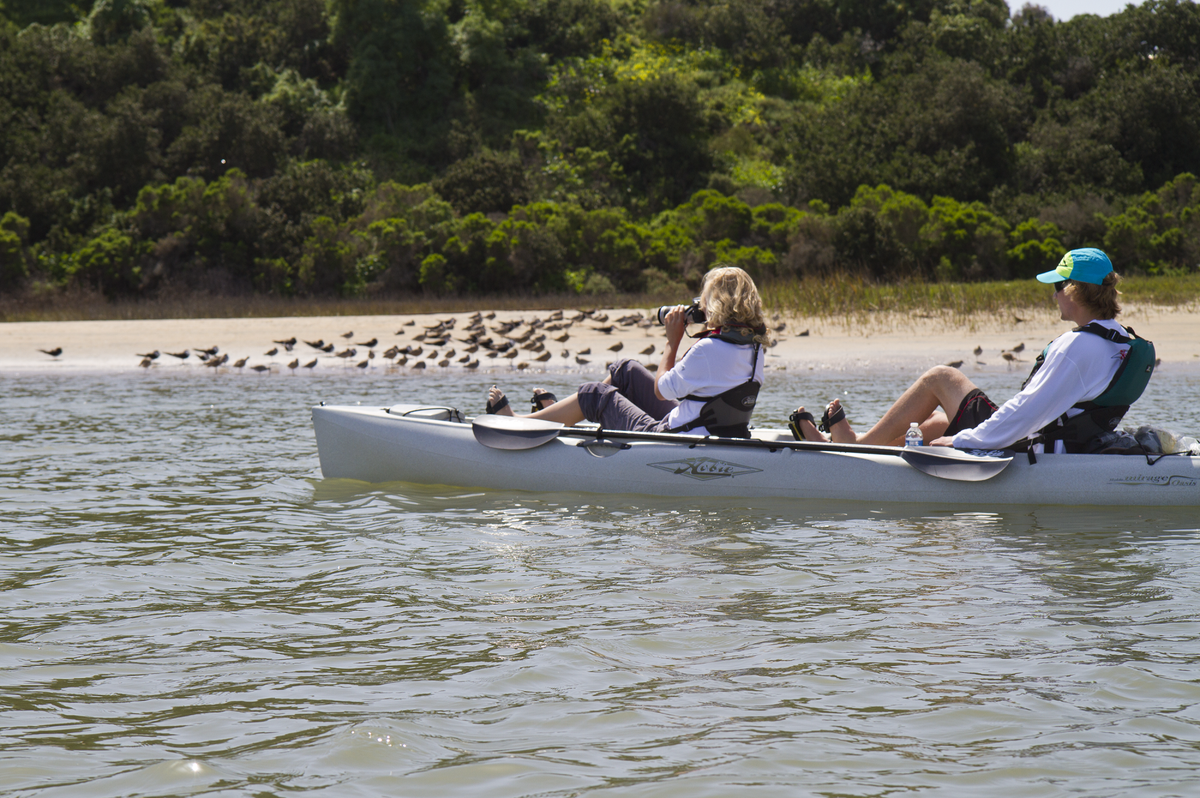
Typical kayakers may balk at being labeled “birders,” but ask them what they enjoy when out touring lakes, streams and back bays, and they’ll likely mention the birds. From flittering songbirds to leggy wading birds, or soaring birds of prey to flocks of waterfowl, birds are paddlers’ frequent on-water companions.
Kayaking is ideally suited to bird-watching because the stealth-like craft can propel paddlers/pedalers to Discovery Channel-like experiences and put them literally at birds-eye level with Mother Nature.
Add in the efficiency of the MirageDrive® pedals on a Hobie® kayak, and the bird-watching experience is enhanced by making it virtually hands-free. Kayakers can grab the binoculars for better viewing, the camera for capturing the moment, or a notebook for recording the species.
“I’ve noticed time and time again how birds spook easily from the erratic movement of conventional paddle kayaks,” said James Currie, a South African-born Florida-based lifelong wildlife enthusiast who hosts the popular birding show “Nikon’s Birding Adventures” on the Pursuit Channel. “The MirageDrive system allows wildlife enthusiasts to minimize movement, splashing and sound. I’ve gotten closer to birds and wildlife using the stealth of the MirageDrive kayaks than ever before.”
Even without such technology, kayakers can ease into great bird-watching arenas just by following a few simple steps:
Pack accordingly: Paddlers/pedalers know to bring water and sunscreen, but also consider investing in binoculars and a waterproof camera. Get a dry bag and tuck into it a bird guide, a terry-cloth towel for keeping binocular or camera lenses clear and a small notebook so you can record features of birds you can’t quite identify to garner help from experts or the Internet later. If you take your smart phone with you, consider downloading one of the popular apps that help with identifying rather than carting along a traditional guide.
Plan your trip around the birds: Morning typically is best, especially just after sunrise, because birds are active and feeding. If the water body on which you visit is tidal, check the tides. Low tide — even mid-day — can create feeding frenzies and offer more action to watch and photograph.
Let the wind or tide do the work: When planning your route, position yourself for viewing so you’re as motionless as possible in prime birding areas. Also, don’t pack so much gear and goodies onboard that you make noise shuffling stuff around. Be quiet!